Description
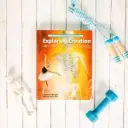
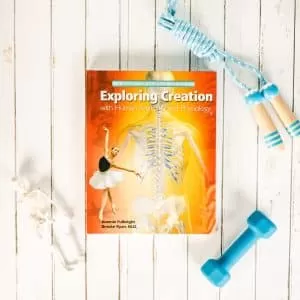
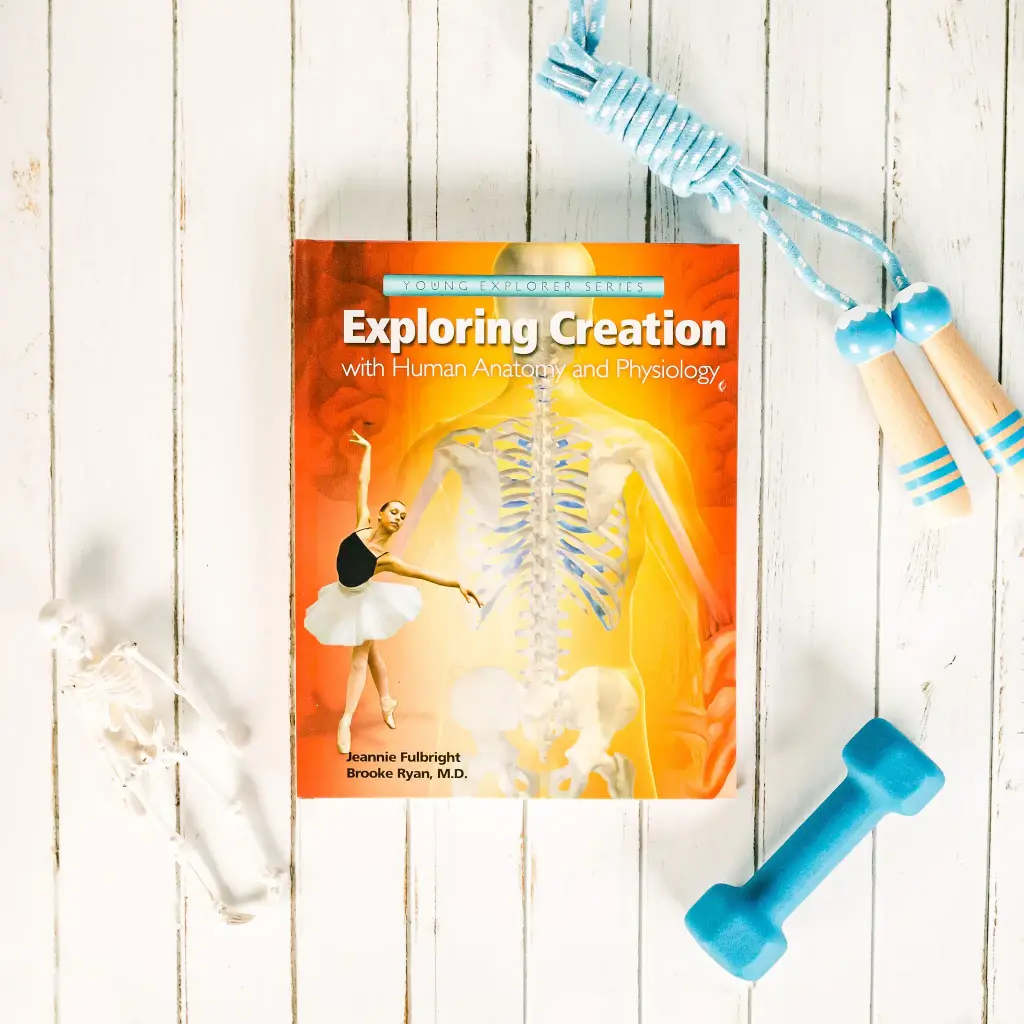
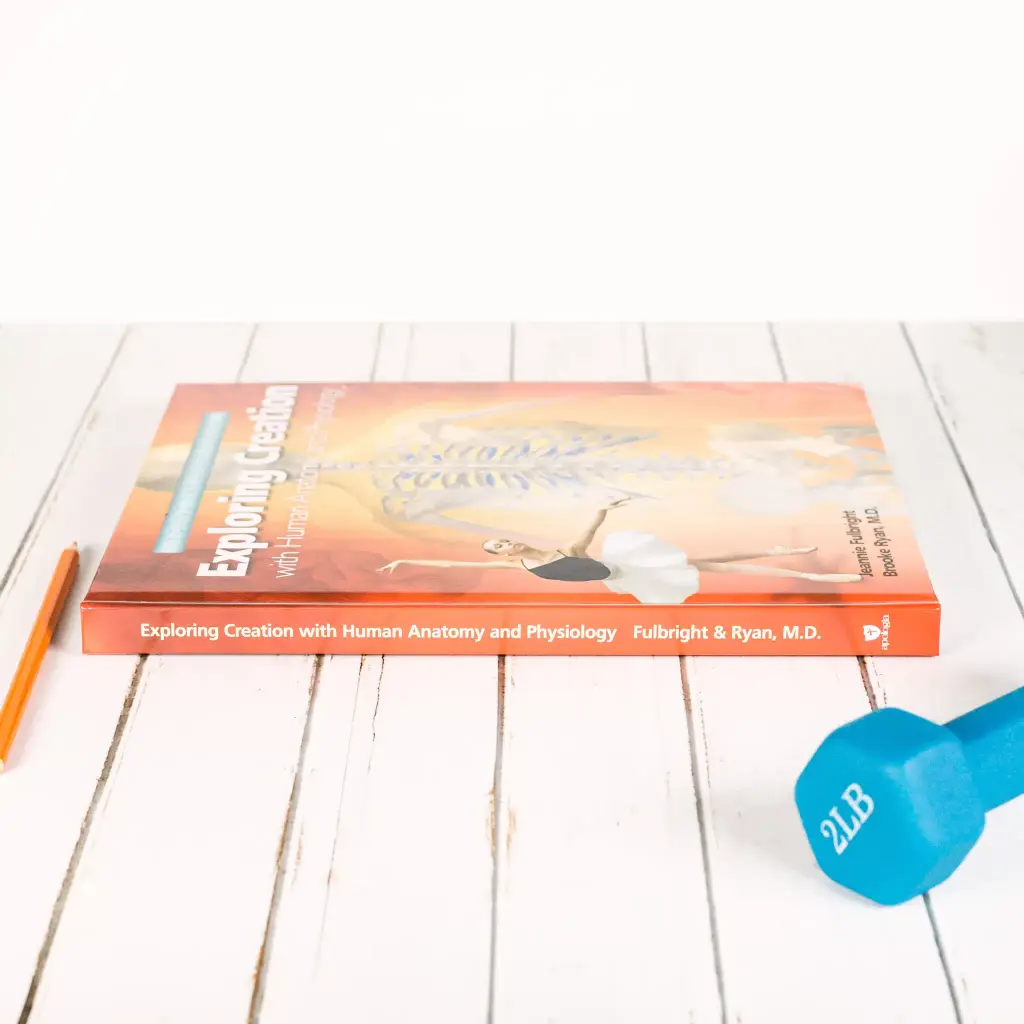
Exploring Creation with Human Anatomy and Physiology
is a homeschool science curriculum for elementary students. In this
course, your students will do a deep dive into the unique design of
their own body–both inside and out–and how they can keep it working
well! They’ll also explore a range of topics, such as human DNA, cell
anatomy, and body systems, through the curriculum filled with vivid
graphics, interactive lessons, and hands-on projects.
This anatomy book highlights the connection between science and the
wonder of God’s creation. Students will discover how the intricate
design of the human body reflects the Creator’s wisdom and care,
fostering a deeper appreciation for their own unique design. Through
interactive activities, lessons, and hands-on projects, this faith-based
anatomy book inspires curiosity and a lifelong desire to marvel at the
complexity of God’s work in human anatomy and physiology.
Curriculum Overview
We believe your child’s education is
at its best when their learning begins with curiosity. That’s why this
course was designed for elementary students with no prerequisite. We use
the practical concepts and things in their world to help them learn and
experience that science isn’t just a class–it’s a means for them to
discover their world!
Apologia’s Exploring Creation with Human Anatomy and Physiology course
takes an academic and practical approach to teaching your students
about the human body. As they engage with the lessons, projects, and
experiments, your student will better understand the complexity and
purposes of the human body’s design and how best to care for their own
body.
This course begins with a brief history of medicine and then gives your student a peek into cells and DNA. Through vivid graphics and hands-on activities featured in the anatomy and physiology textbook,
your student will study and explore various body systems, nutrition,
and health, how God designed their immune system to protect them, and
what makes them a unique creation of God.
As they work their way through the
course, your student will enjoy creating their personalized human figure
and adding to it as they learn about each of the body’s organs. They
will also enjoy conducting scientific experiments and projects, such as
testing the bacteria content around the house, finding their blood type,
creating a cell model from Jello and candy, and even building a
stethoscope!
Human Anatomy and Physiology: Lesson Plans & Teaching Materials
There are 14 lessons in this one-year
Human Anatomy and Physiology course. Detailed lesson plans and a
suggested daily schedule are included in the student notebooking journal
(sold separately). This will set you and your student up for success as
they work through the course while also providing flexibility to meet
the needs of your student and your family.
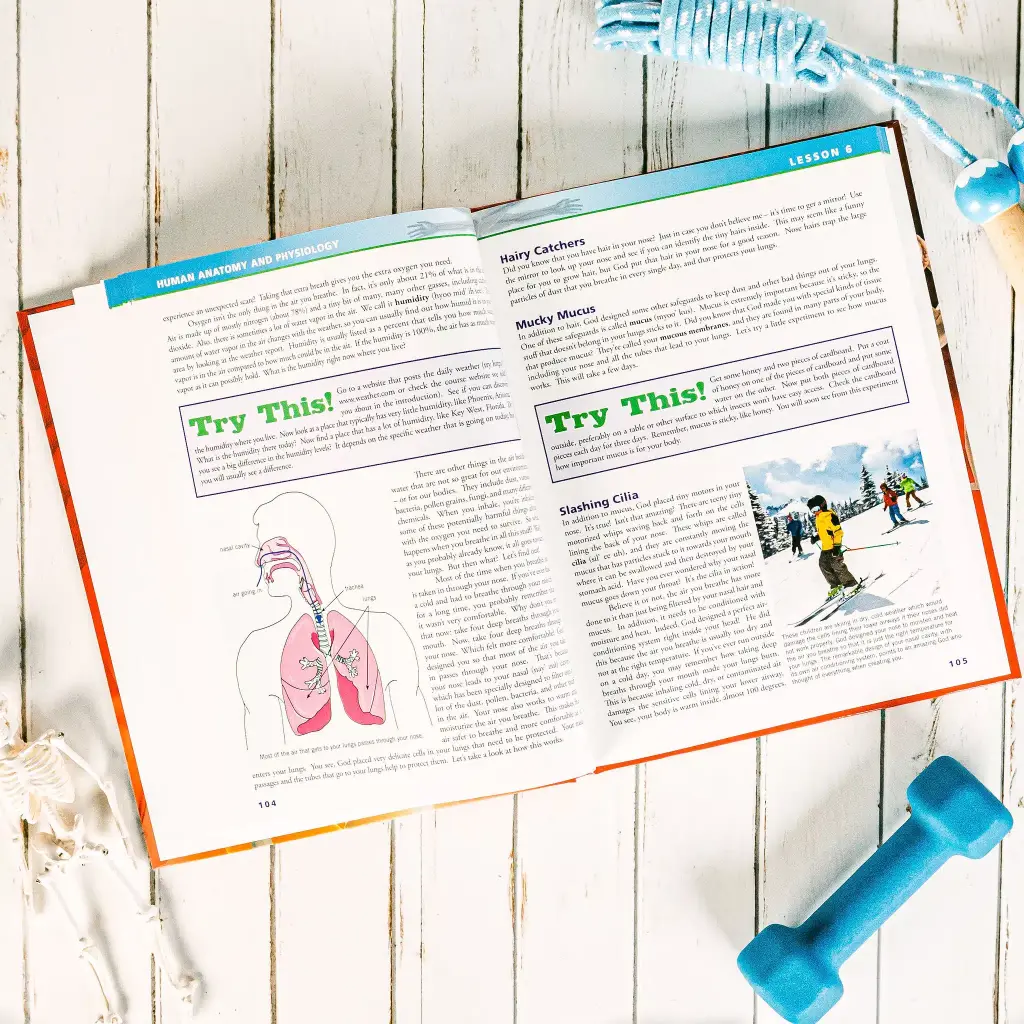
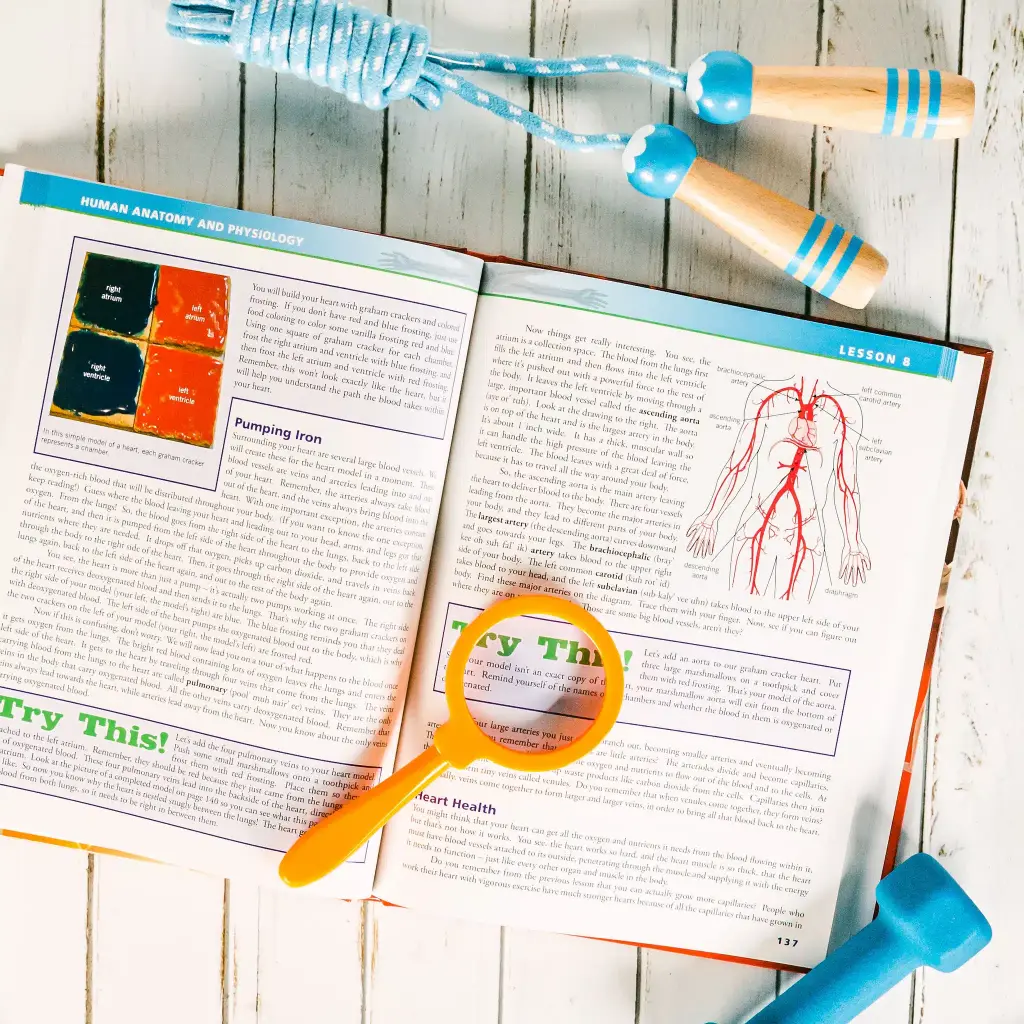
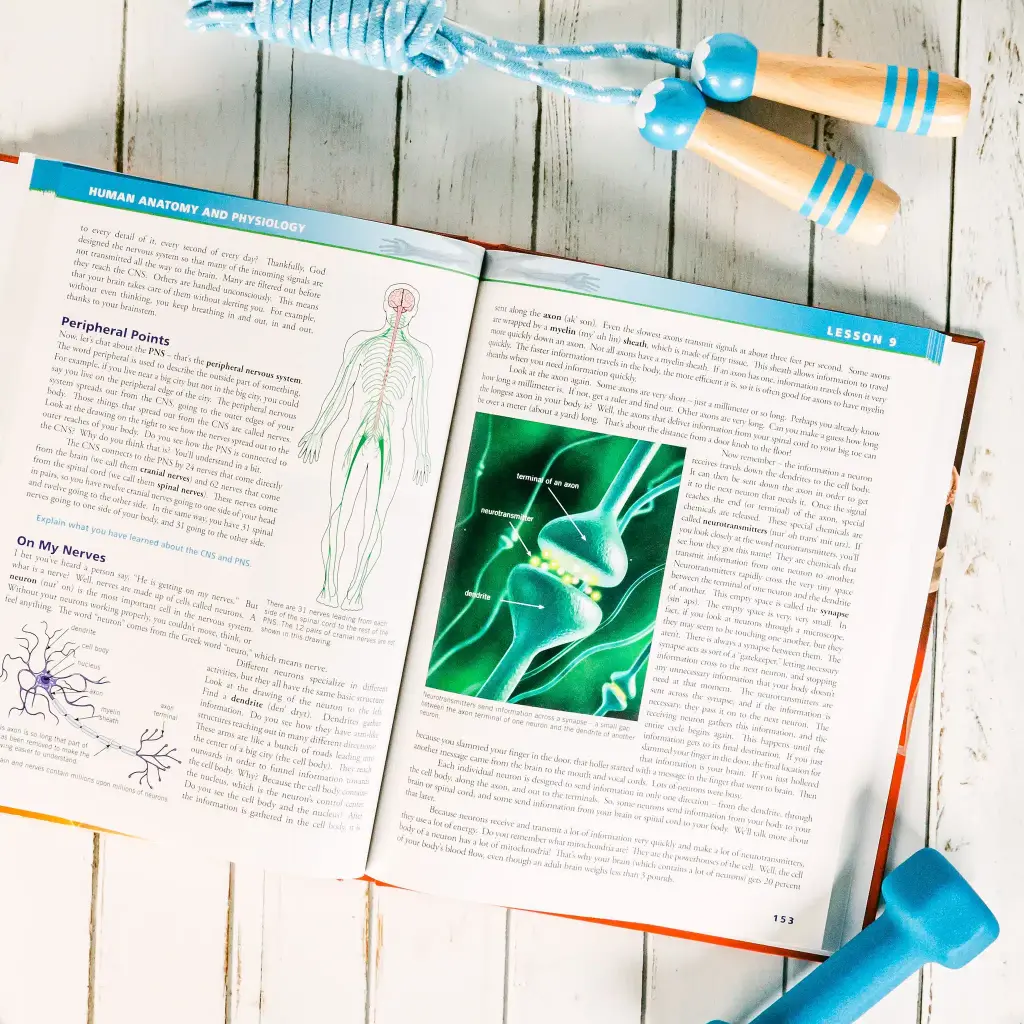
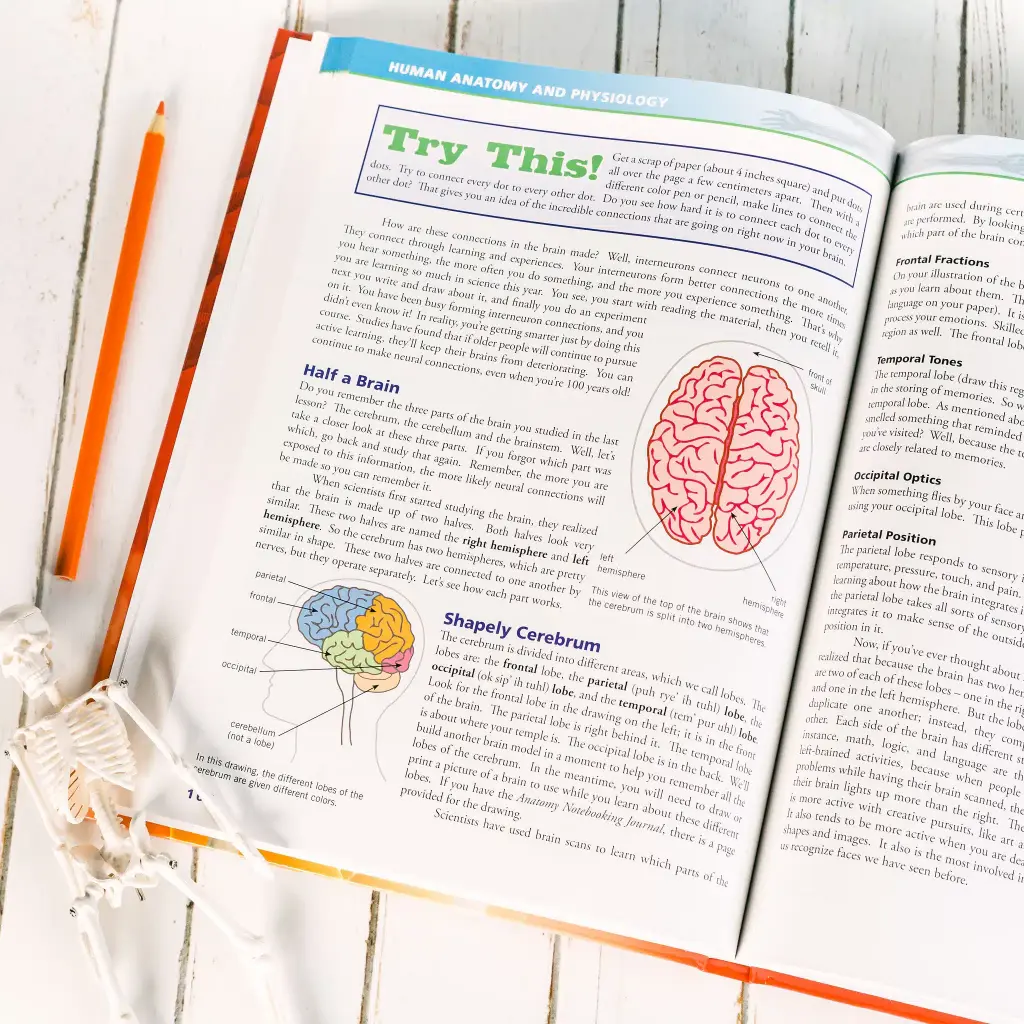
The human anatomy textbook is packed
with vivid photos and various hands-on activities and experiments that
bring Human Anatomy and Physiology to life. The human anatomy and physiology textbook and the notebooking journal
team up to provide engaging hands-on activities to help them solidify
the concepts they are learning. The hard-cover textbook and notebooking
journal are recommended for your student to make the most of this
course.
All the activities and experiments in
the anatomy and physiology textbook use easy-to-obtain household items
and truly make the lessons come alive!
This course covers the following lessons:
- The history of anatomy and physiology
- Cell anatomy, Cell membrane
- Mitochondria, Centrioles, Golgi
- The nucleus
- Cell creation
- DNA and RNA
- The Skeletal System
- The Muscular System
- The Digestive and Renal System
- Health and Nutrition
- The Respiratory System
- Blood
- The Cardiovascular System
- The Nervous System
- The Endocrine System
- The Senses
- The Integumentary System
- The Lymphatic and Immune Systems
- Growth and Development
- And much more!
Hands-on Activities and Experiments
Some of the activities and
experiments your student will complete in the anatomy and physiology
course include making an edible model of a cell, analyzing a chicken
bone, studying muscle fibers, the growing muscle experiment, designing a
digestion theme park activity, testing starch content in food, and
making a diaphragm model to better understand how the breathing process
works.
All activities and projects in this course use easy-to-find household items and truly make the lessons fun!
Meet the Author
Jeannie Fulbright
Great stories have a personality. Consider telling a great story that provides personality. Writing a story with personality for potential clients will assist with making a relationship connection. This shows up in small quirks like word choices or phrases. Write from your point of view, not from someone else's experience.
Great stories are for everyone even when only written for just one person. If you try to write with a wide, general audience in mind, your story will sound fake and lack emotion. No one will be interested. Write for one person. If it’s genuine for the one, it’s genuine for the rest.